Hera surveys asteroids with superhuman vision
The European Space Agency’s Hera mission for planetary defence surveys its target asteroids with a combination of instruments that allow it to see more than human eyes can.
By surveying the asteroids with multiple different instruments we can get valuable information that we couldn’t learn with studying visible light alone.
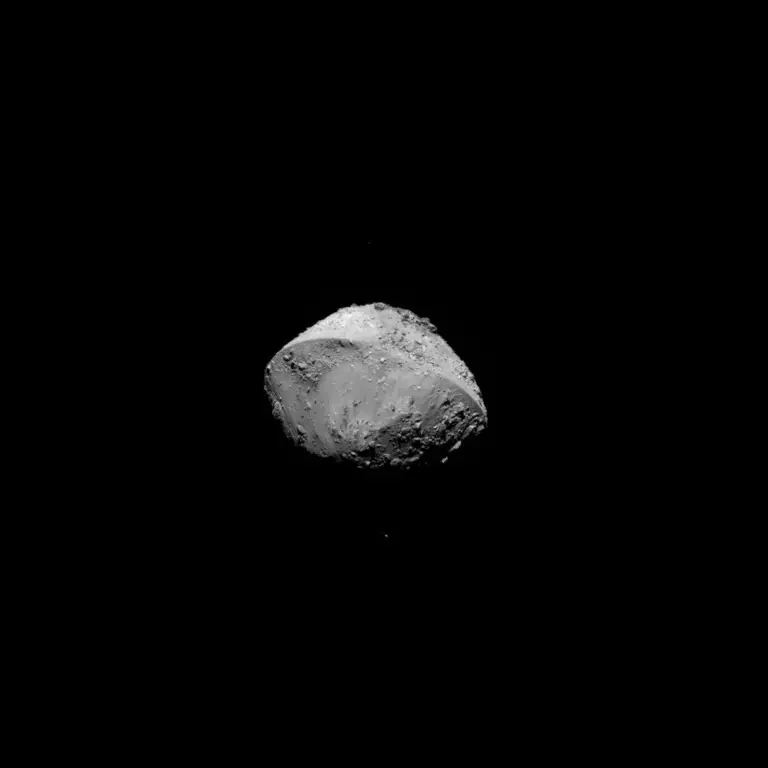
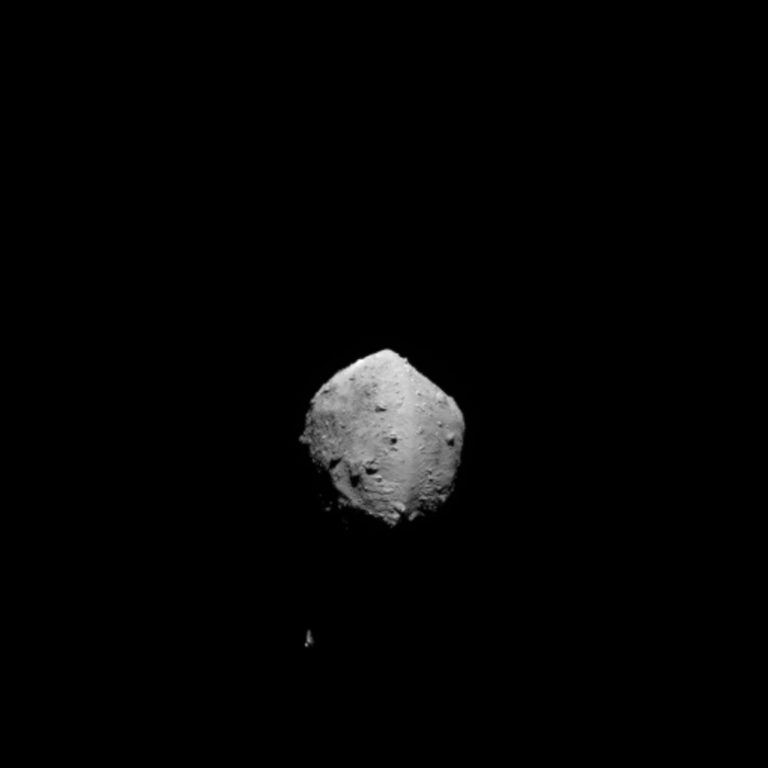
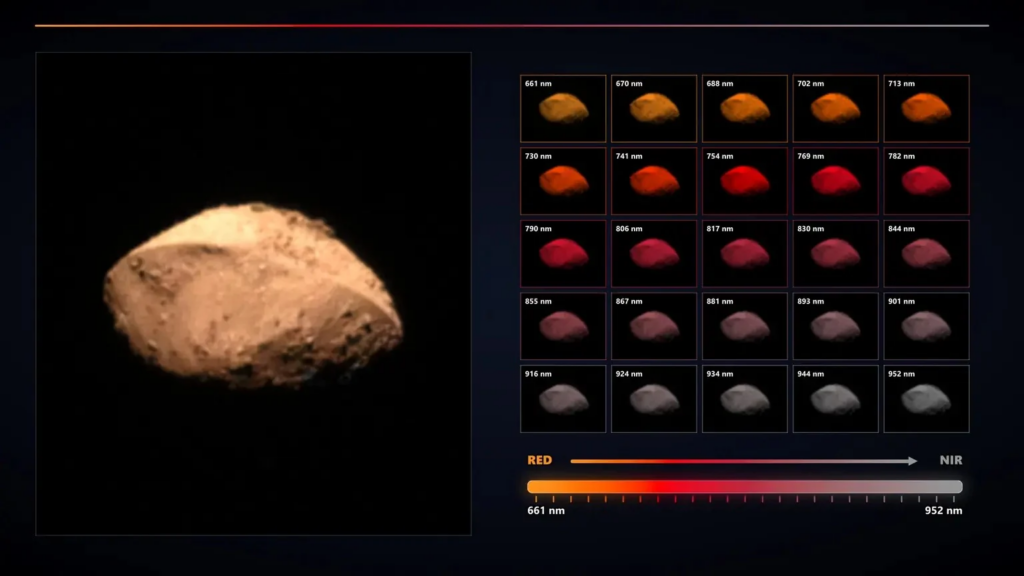
In the monochrome image, captured by Hera’s monochrome Asteroid Framing Camera, we can see the surface and rocky nature of the Didymos asteroid. A different Hera instrument, HyperScout H, observes the asteroid surface in different hues. The subtle differences in how sunlight reflects from the asteroid’s surface are directly linked to its composition. HyperScout can detect different spectral signatures from the visible range to near-infrared, which can then be compared to laboratory measurements of meteorites and mineral samples to learn what the asteroid is made of.
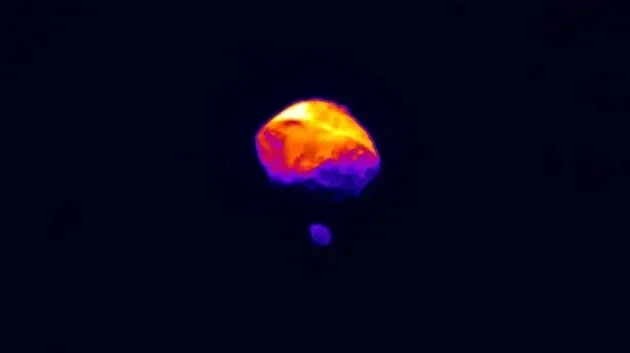
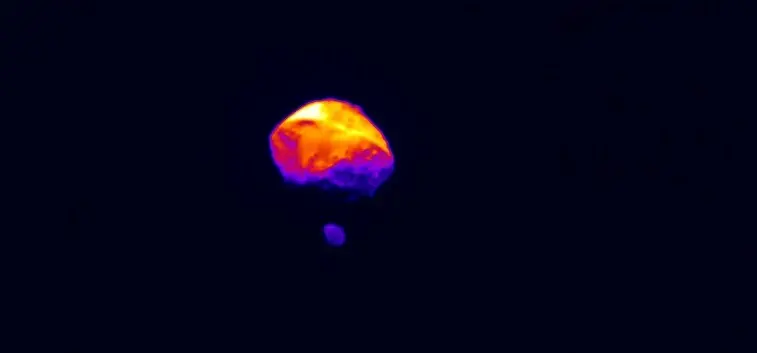
A third Hera instrument, TIRI, the Thermal Infrared Imager, allows Hera to see further into the infrared range. TIRI sees hot areas as red while cooler areas appear blue. Mapping the temperatures of different areas gives researches insight about the composition of the asteroid.
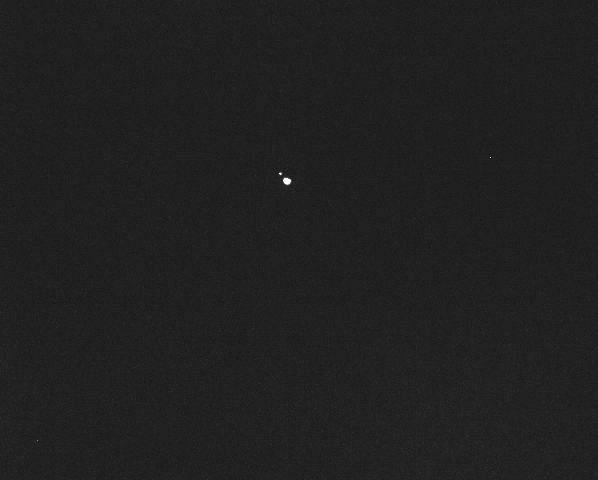
Detailed images of both asteroids will be released on the 25th of November. You can learn more about Hera’s instruments on the ESA website here, or learn more about Pori Space Lab’s link to Hera here.